How Much Food Does a Commercial Holding Cabinet Hold?
When you’re shopping for a commercial holding cabinet, one of the first questions is simple: How much food can it actually hold?
The answer involves more than just the cabinet’s outside size. Capacity usually depends on how many pans fit inside, their size, how closely you can load them, and the type of food you’re storing.
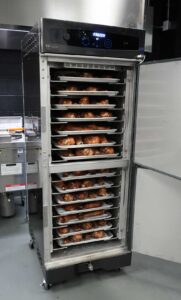
A cabinet for a busy kitchen might hold full-size pans, half-size pans, or both. Depending on what you’re storing, a single pan could hold dozens of servings.
Here’s what to know about holding cabinet capacity before making a purchase.
What Determines Commercial Holding Cabinet Capacity?
Commercial holding cabinet capacity is typically described by:
- Pan size
- Number of pan positions
- Pan spacing
- Cabinet dimensions
- Maximum food load
- Type of food being held
A cabinet may be listed as holding 10, 15, or 20 pans, but that’s not the full picture. You also need to check which pan sizes fit and how much food each pan can actually hold.
This is important whether you run a restaurant, catering business, healthcare kitchen, school cafeteria, commissary, or any high-volume foodservice operation.
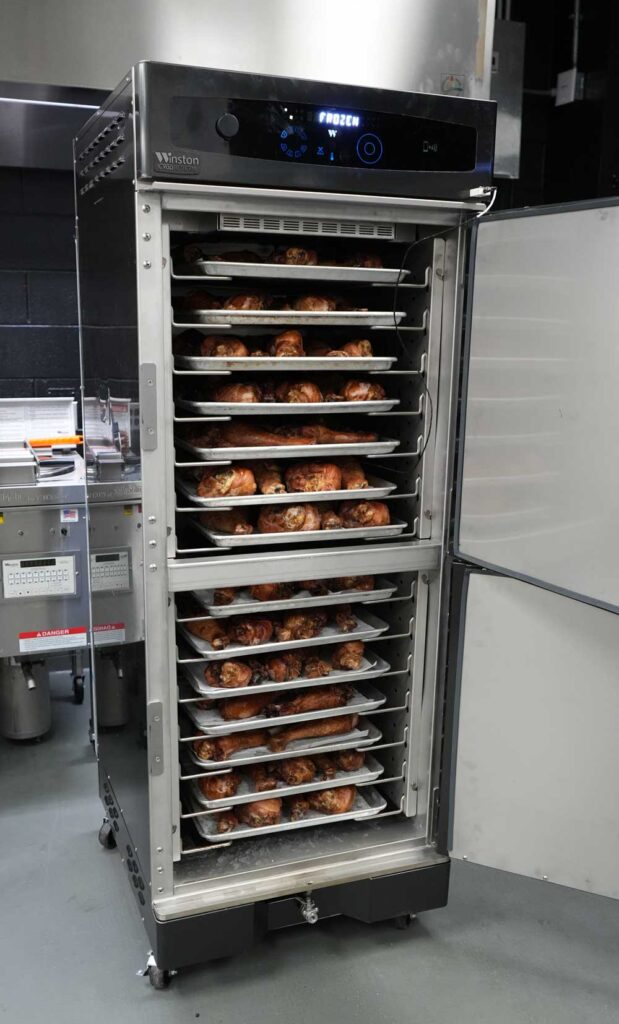
Full-Size Pans vs. Half-Size Pans
The most common way to compare holding cabinet capacity is by pan size.
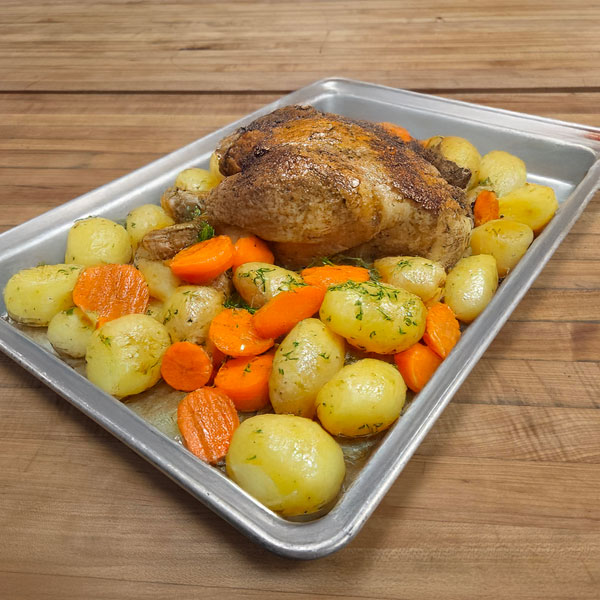
Full-Size Pans
Full-size pans are useful for:
- Fried chicken
- Pulled pork
- Roasted meats
- Vegetables
- Rice
- Pasta
- Casseroles
- Prepared entrees
Since they hold more food, full-size pans are usually better for busy kitchens that need to move a lot of food quickly.
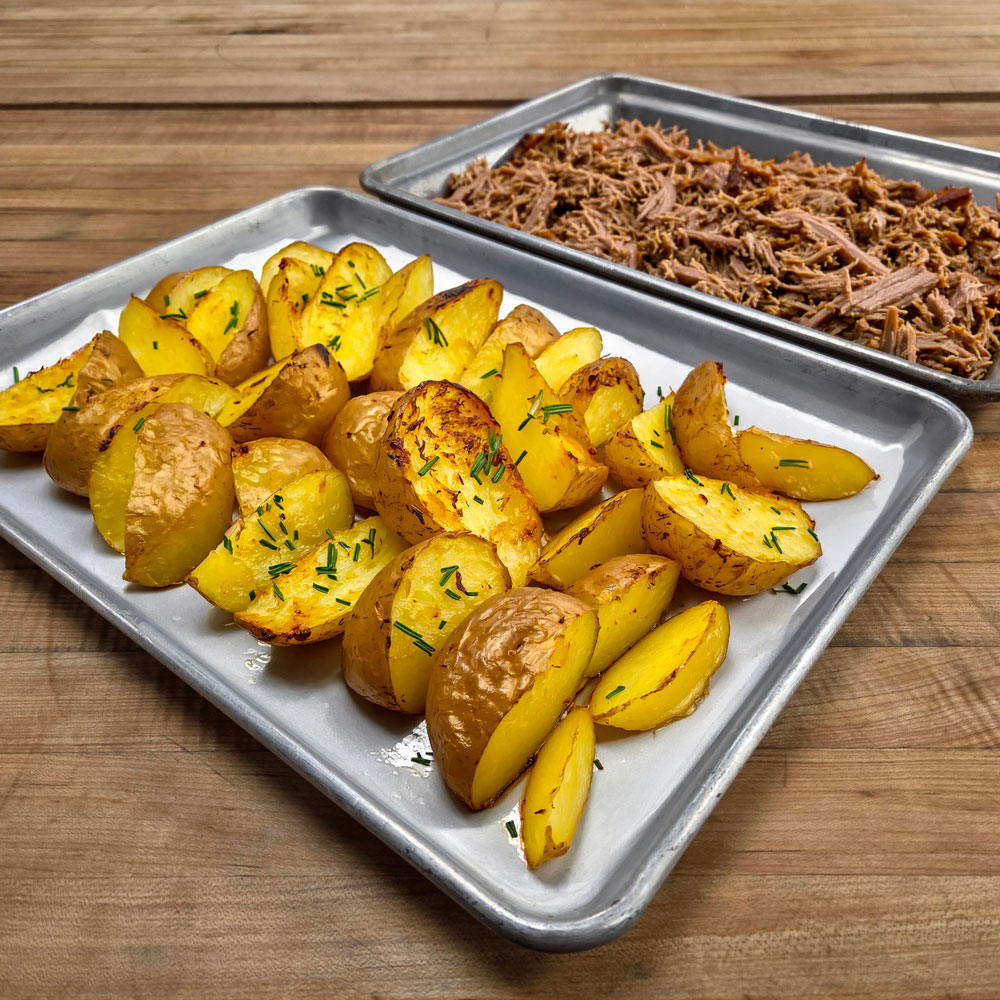
Half-Size Pans
A half-size pan is approximately 12 x 10 inches, or roughly half the footprint of a full-size pan.
This makes half-size pans helpful when you need more flexibility in organizing food.
For example, instead of using one full-size pan for a single item, you can use two half-size pans for different foods.
This can be especially useful for:
- Smaller batches
- Side dishes
- Different menu items
- Portion-controlled foods
- Catering
- Operations with frequent menu changes
Two half-size pans usually take up about the same space as one full-size pan.
How Many Pans Does a Holding Cabinet Hold?
This is where figuring out holding cabinet capacity can get confusing.
A cabinet’s capacity may be listed as a certain number of full-size pan positions, while another manufacturer may describe its capacity using half-size pans or a different pan configuration.
For example, a cabinet advertised as holding 20 full-size pans provides substantially more capacity than one designed around 10 full-size pans.
But capacity is more than just counting pans.
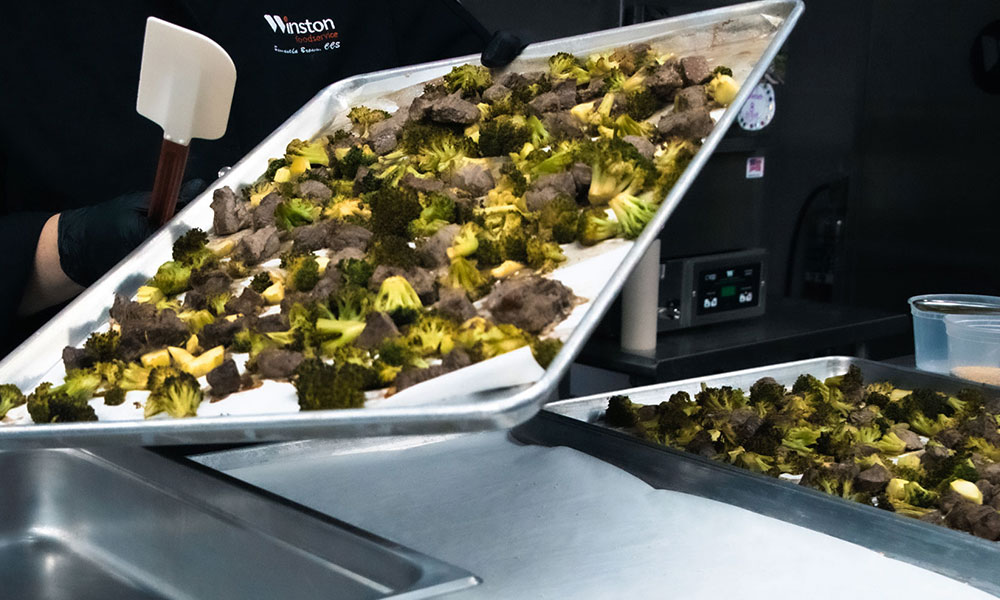
Pan spacing is important, too.
If you’re holding bulky products, you may need more vertical space between pans. If you’re holding flatter products, you may be able to use tighter spacing.
That’s why you should look at the cabinet’s actual pan setup rather than just the advertised capacity.
Full-Size Holding Cabinets
A full-size holding cabinet is generally intended for higher-volume foodservice operations.
These bigger cabinets give you the space to prepare large batches and keep food ready for service.
They’re commonly used in:
- Restaurants
- Hotels
- Schools
- Hospitals
- Healthcare
- Catering
- Central kitchens
- Commissaries
- High-volume foodservice operations
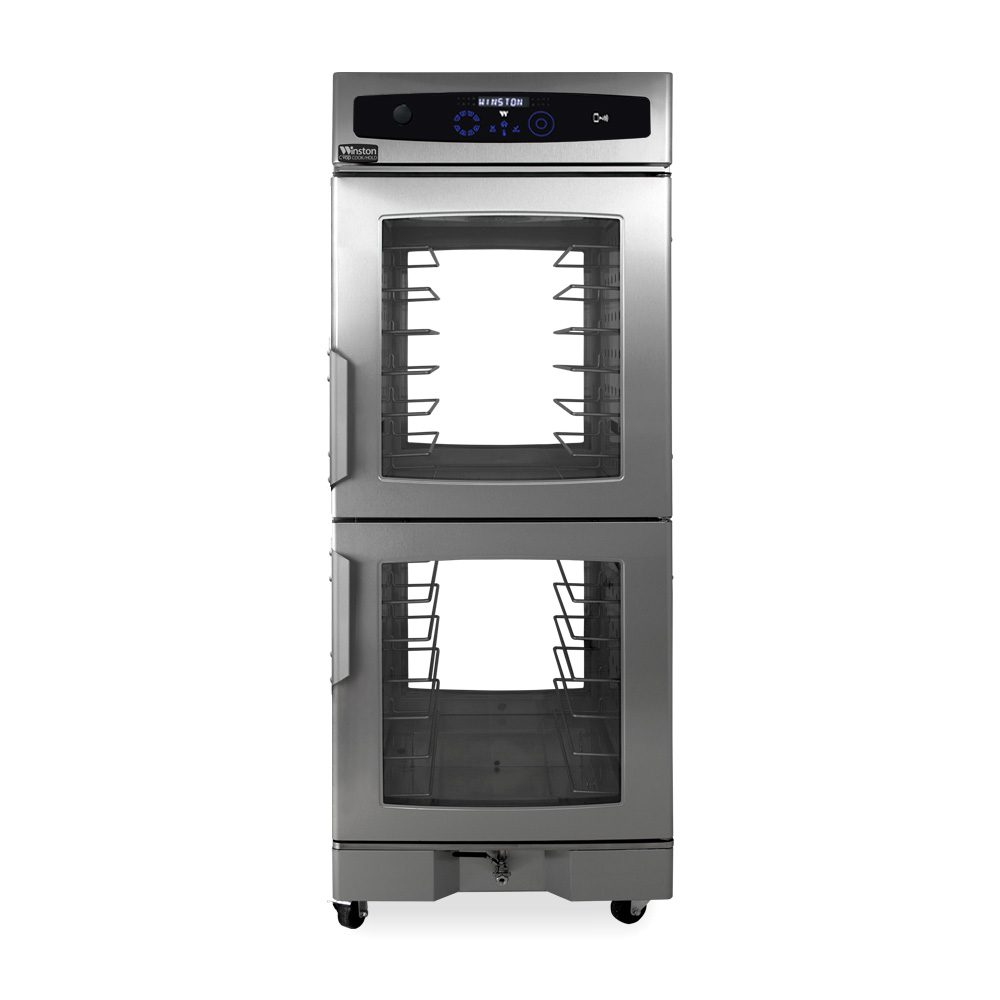
If you make large amounts of food, a full-size cabinet can cut down how often staff need to reload or move food during service.
Half-Size Holding Cabinets
A half-size holding cabinet uses less space but still gives you controlled holding capacity.
They work well when kitchen space is tight or you don’t need as much capacity as a full-size cabinet offers.
Half-size cabinets can work well for:
- Smaller restaurants
- Cafés
- Catering operations
- Food trucks
- Satellite kitchens
- Smaller healthcare facilities
- Limited-volume foodservice
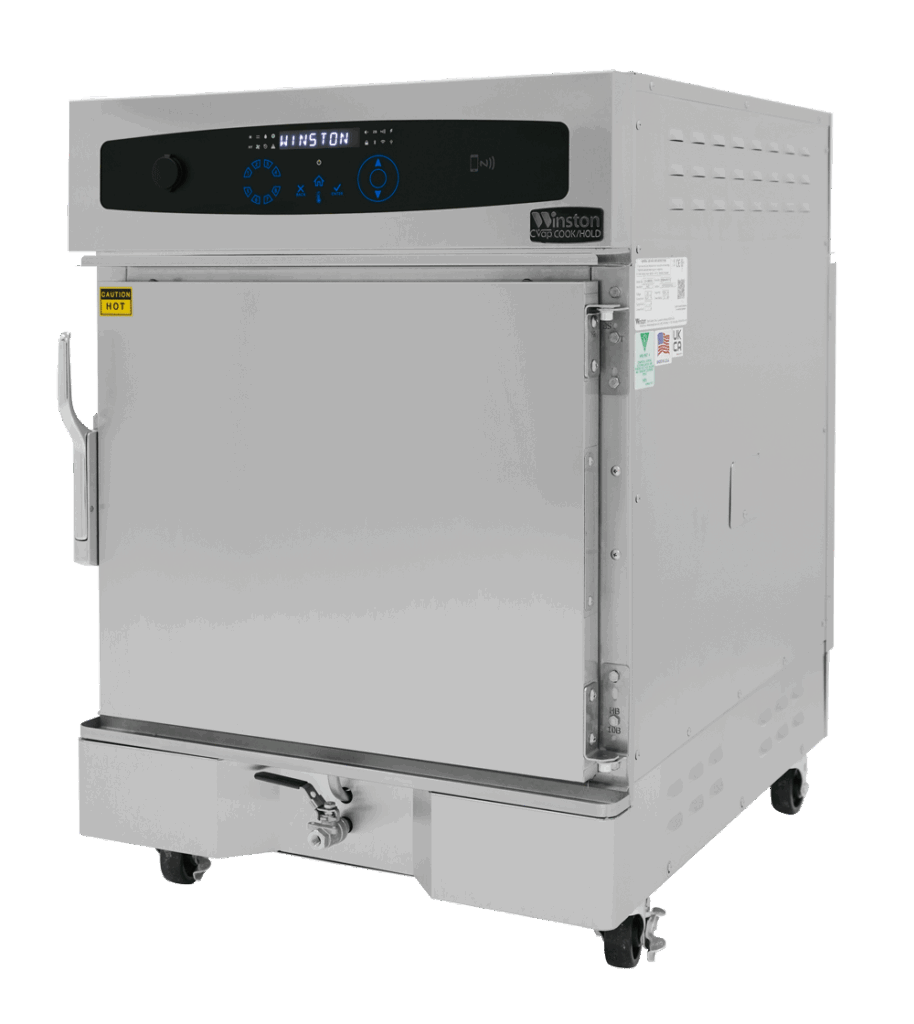
Don’t think a smaller cabinet is less useful. The best size depends on how much food you make, how often you replenish it, and how much kitchen space you have available.
Cabinet Dimensions Matter
Capacity isn’t just about the number of pans a cabinet can fit.
Width:
Will it fit through doors and into the intended kitchen space?
Depth:
Will the cabinet interfere with walkways or other equipment?
Height:
Can employees comfortably load and unload the upper pan positions?
Mobility:
Does the cabinet need to move between the kitchen, serving area, or catering location?
Electrical Requirements:
Does the available power meet the equipment’s requirements?
Also, remember to leave enough space around the cabinet. Even if the equipment fits, it can still cause problems with workflow.
How Does Pan Capacity Translate to Servings?
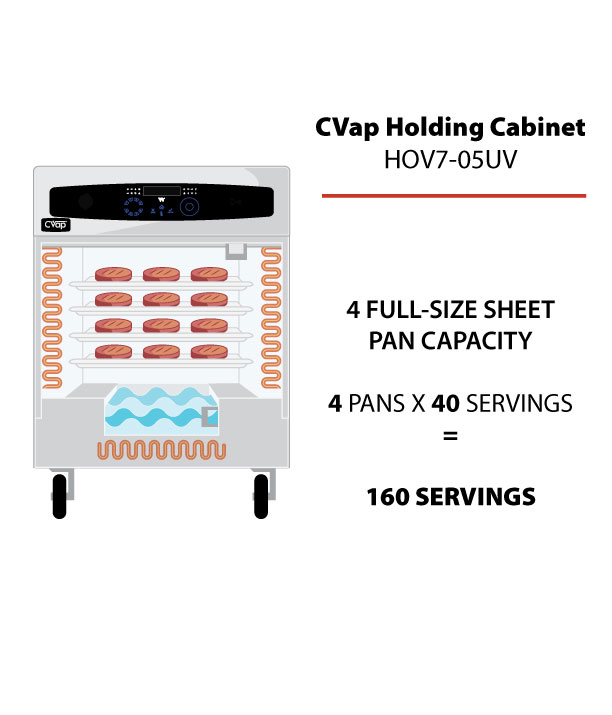
This is where understanding capacity really helps.
The number of servings in a pan depends heavily on the food, portion size, pan depth, and how the food is prepared.
For example, a shallow pan of chicken portions won’t provide the same number of servings as a deep pan of rice.
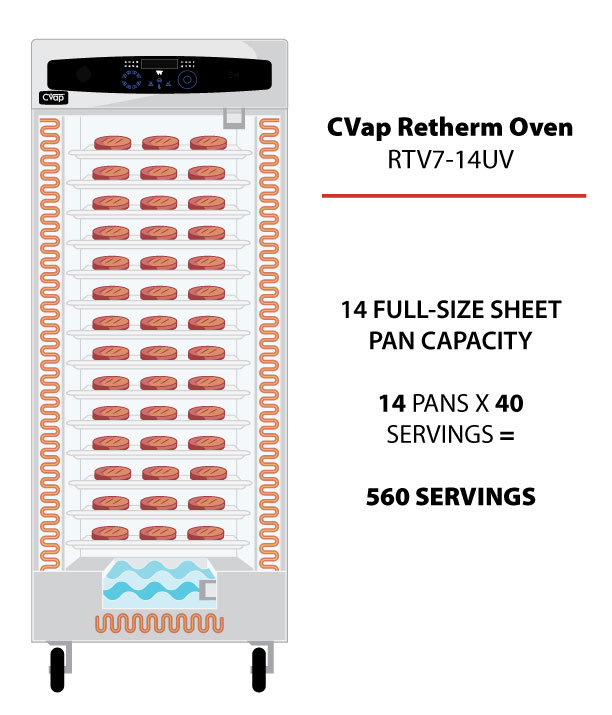
As a rough planning exercise, consider a full-size pan containing 40 portions of a particular menu item.
This isn’t a one-size-fits-all calculation. It’s just a way to estimate capacity. When evaluating a cabinet, ask:
How many pans do we need during our busiest service period, and how many servings does each pan represent?
That answer is much more helpful than just asking about the cabinet’s cubic feet.
What happens to the food while it's sitting in those pans?
A cabinet might hold a lot, but if the food dries out, loses quality, or isn’t good by the time you serve it, that capacity isn’t very useful.
That’s where Winston CVap® changes the conversation.
Winston CVap: More Than a Place to Park Food
Winston CVap cooking and holding cabinets are designed around Controlled Vapor Technology, which gives operators independent control over temperature and moisture.
This means CVap does more than just blow hot, dry air around your food.
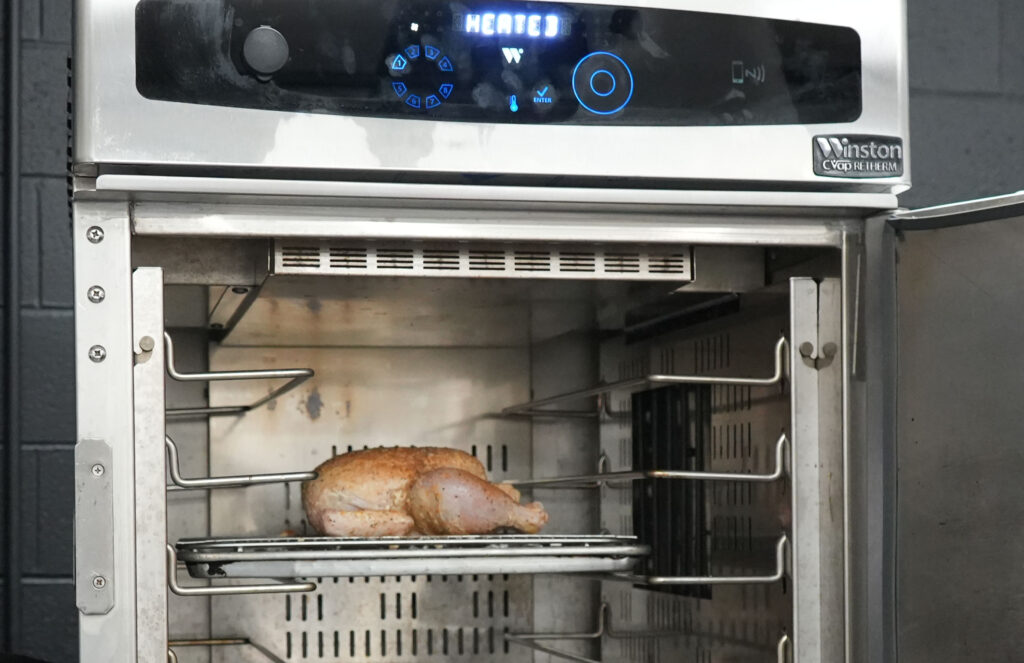
The controlled environment helps food retain moisture and quality during holding while giving operators control over the cooking and holding process.
And CVap isn’t limited to holding.

Depending on the model and application, operators can use CVap equipment for cooking, holding, overnight cooking, baking, steaming, retherming, and sous vide-style applications.
So, you shouldn’t judge a cabinet only by how many pans it holds.
You should also consider how much work it can handle.
Choosing the Right CVap Cabinet Capacity
When determining which Winston CVap cabinet is right for your operation, start with your actual workflow.
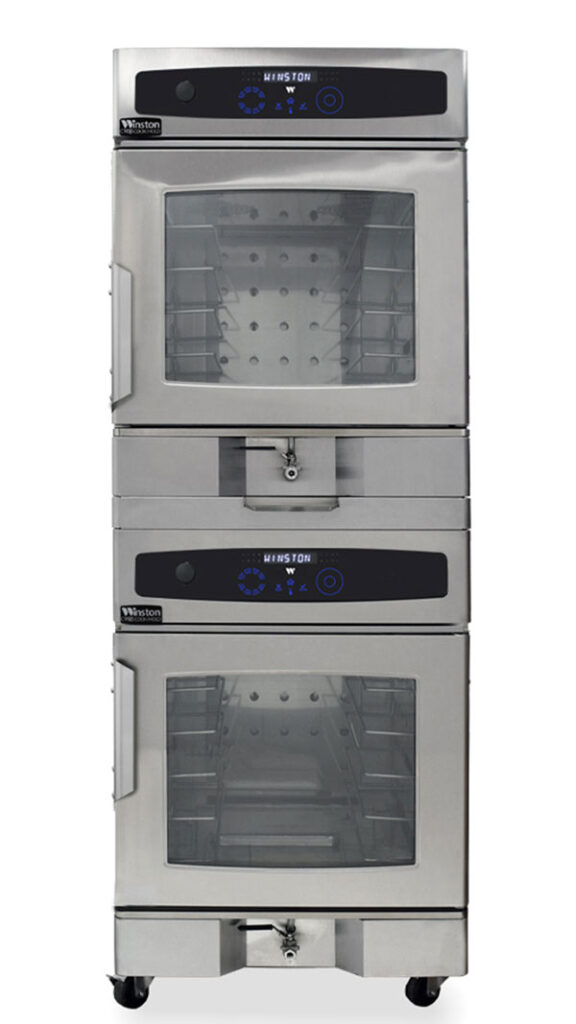
Consider:
- How many meals or servings do you produce during peak service?
- How many pans are normally needed?
- Are you primarily using full-size or half-size pans?
- How frequently are pans being loaded and removed?
- Are you cooking in the cabinet or only holding?
- How much kitchen space is available?
- Do you need to transport the cabinet?
- Could one piece of equipment replace multiple pieces of equipment or processes?
The goal isn’t just to buy the biggest cabinet that fits through your door.
It’s about choosing the right capacity for your operation, so your kitchen can produce, hold, and serve food efficiently.
Commercial Holding Cabinet Capacity: Think Beyond the Pan Count
When you compare holding cabinets, pan capacity is a good place to start, but it’s not everything.
Consider pan size, number of pans, cabinet size, serving needs, workflow, and what the equipment can really do.
With Winston CVap, you can go even further in your evaluation.
Need help picking the right CVap capacity for your operation? Reach out to the Winston Foodservice team to discuss your menu, volume, pan setup, and workflow.