
Gary Wycoff
Winston Foodservice Regional Sales Manager
I get asked this all the time, and the quick way I explain it is: a Retherm oven is basically a Cook and Hold oven on steroids.
When people hear the word “retherm” or “rethermalizer,” they often assume it is only meant for reheating precooked products. That is not the case. An RTV Retherm oven can absolutely cook from raw and, depending on the product and process, can sometimes outperform a traditional Cook and Hold oven.
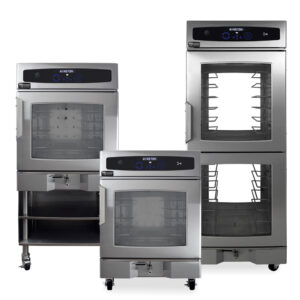
So what is actually different between the two?
RTV units include an additional air heater on the back wall and are equipped with two convection fans, compared to the single fan in a CHV series cook and hold oven. That extra heat source and increased air movement create a more aggressive cooking environment when you need it.
Why I Like the Chicken Demo
One of my favorite ways to show this difference to manufacturing representative sales partners and potential customers is through a simple whole-chicken demo. It is visual, practical, and tells the story fast.
We typically run this test in our Winston test kitchen in Louisville, KY, using comparable half-size units, either CHV and RTV 5s or 7s. Keeping the units the same size helps isolate what the equipment itself is doing.
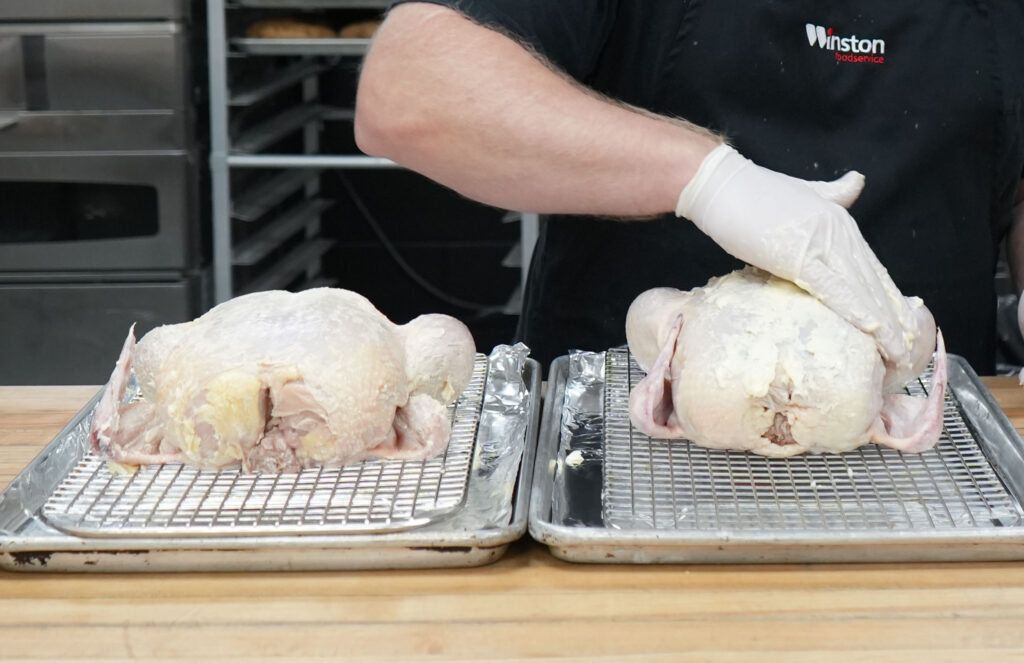
We start with two whole chickens. The key is making sure they are roughly the same size and weight. Season them however you normally would. For this demo, we keep it simple with light oil, salt, and pepper.
Both ovens are set to the same:
- 160 Vapor temperature
- 350 Air temperature
- Convection fan ON
The chickens cook for 1.5 hours and are pulled simultaneously with no hold.
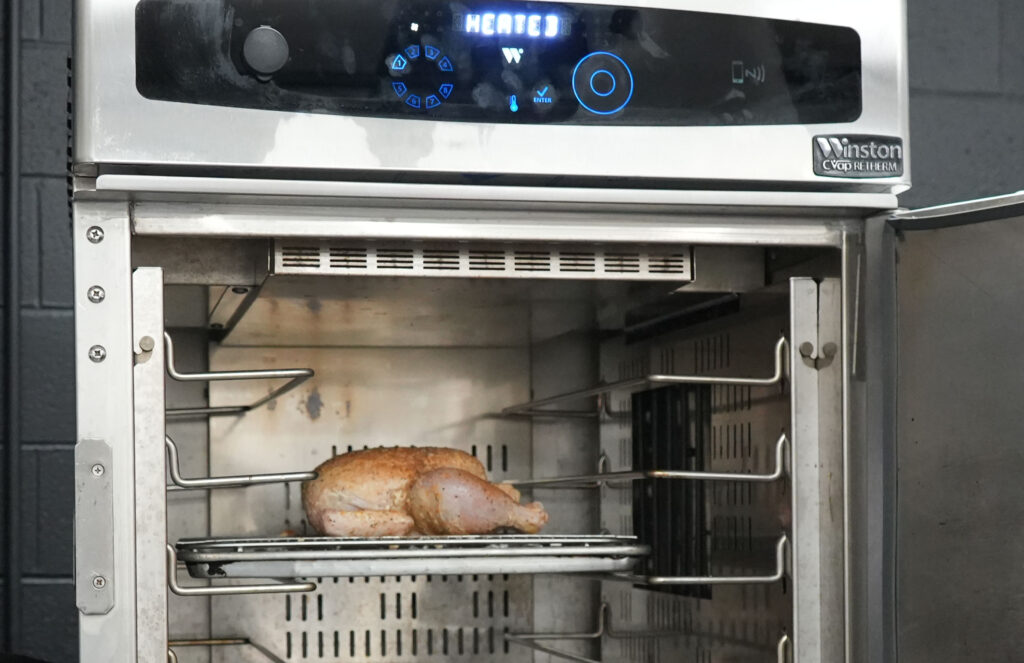
What You See (and What It Means)
When the doors open, the difference is blatantly obvious.
The RTV chicken shows a noticeably deeper color, while the CHV bird is more pale. But here is the important part: internally, they are the same temperature and both deliver excellent flavor and texture.
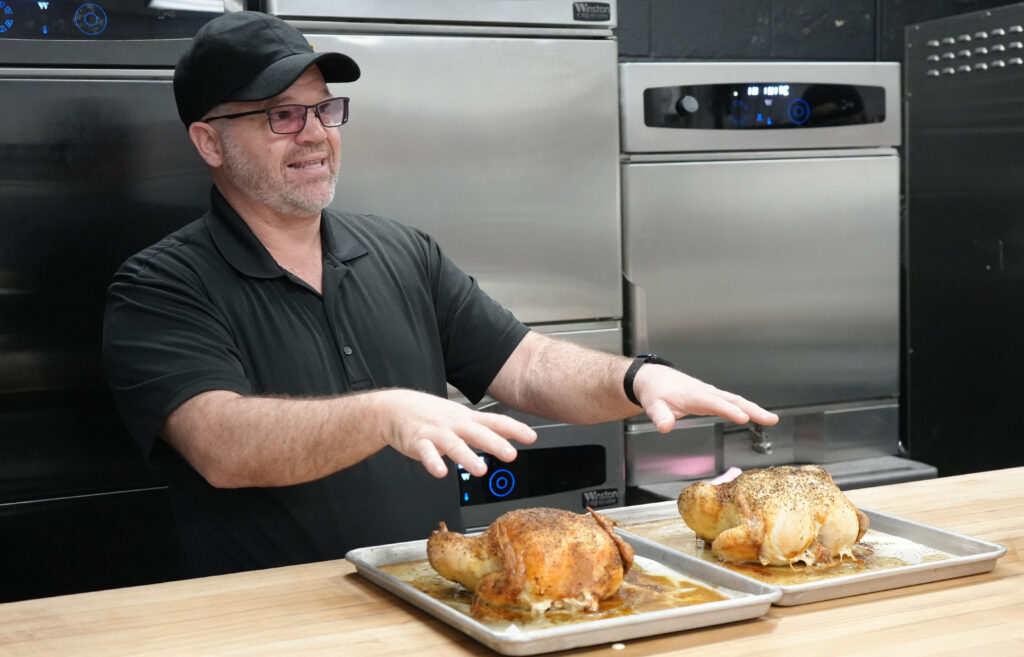
The difference comes down to moisture loss. Color is yield. Because the RTV chicken develops a darker, slightly crispier skin, it typically gives up a bit more moisture during the cook.
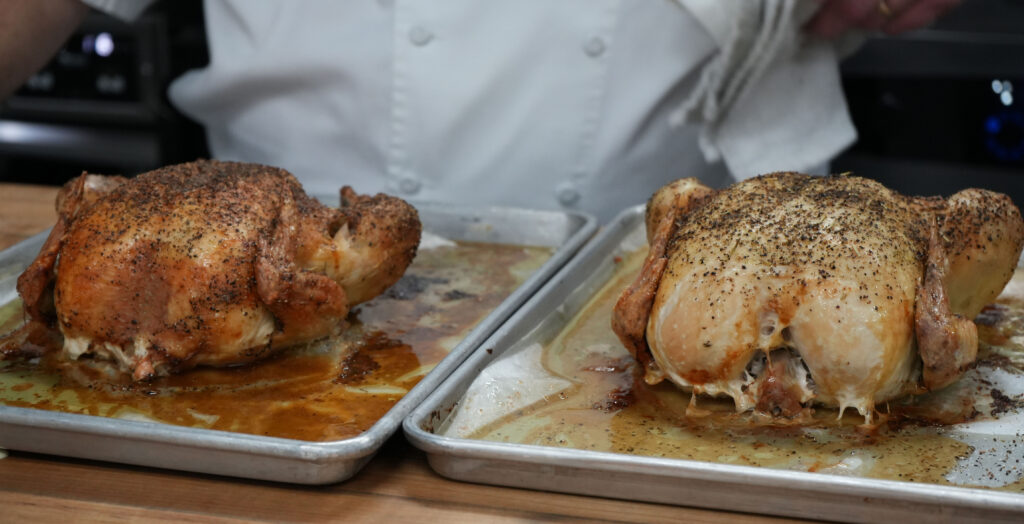
Chicken on the left, cooked in RTV. Chicken on the right, cooked in CHV.
Is that a problem? Not necessarily.
It comes down to preference and application. Some operators and customers want that deeper, roasted look. We all eat with our eyes first. Others may prioritize maximum yield and moisture retention over color.
What Operators Should Consider
Before choosing equipment or locking in a process, it is worth asking a few practical questions:
- What visual result does the chef want?
- What do your customers expect to see on the plate?
- Is yield or exterior color more important to your operation?
- Are you primarily cooking from raw, reheating, or doing both?
Both CHV and RTV units are incredibly capable. The right choice depends on what you are trying to accomplish in your kitchen.
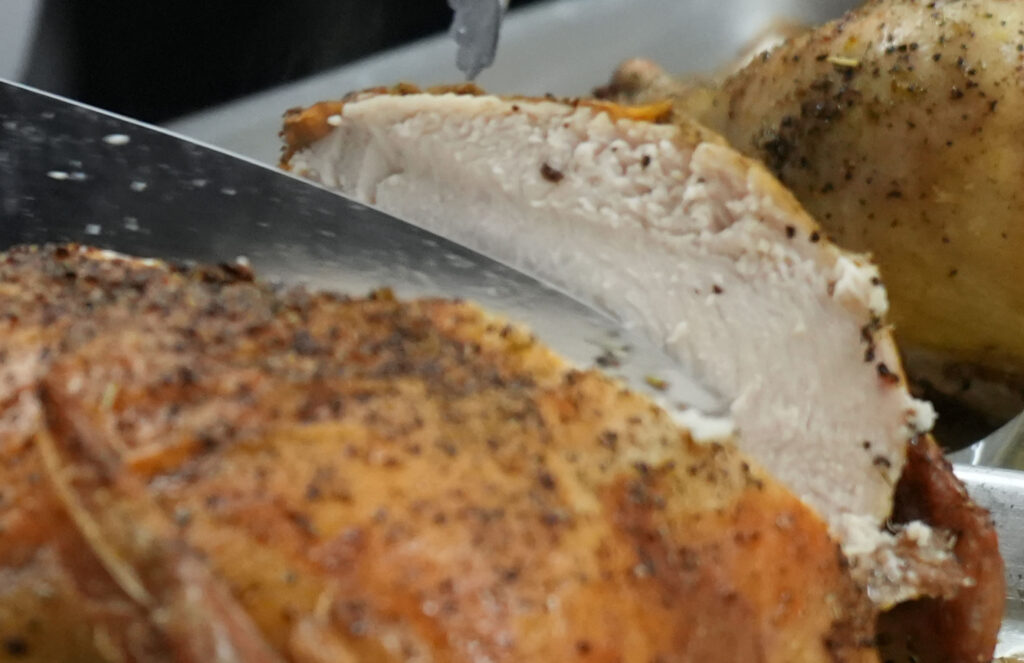
At the end of the day, the CHV Cook and Hold and the RTV Retherm are more alike than different, but the RTV brings extra horsepower when you want stronger browning and more aggressive air movement. The CHV excels when maximum moisture retention and gentle cooking are the priority.
Neither is universally “better.” The best fit is the one that matches your menu, your process, and your customers’ expectations. If you are not sure which direction makes the most sense, run the demo. Seeing the difference in your own product tells the story better than any spec sheet ever will.
In my opinion, consider the RTV7 series. You can have fan(s) on during the cook cycle and program fan(s) off during extended hold periods.
If you have any questions or would like to set up a demo, contact me. We will be happy to help.